What a trigger is
A trigger receives data from an external system (e.g. a form or a CRM like HubSpot) via a webhook address, creates a case from a template, prefills fields from the delivered data and starts it. This turns an incoming event into a running flow with no intermediate step.
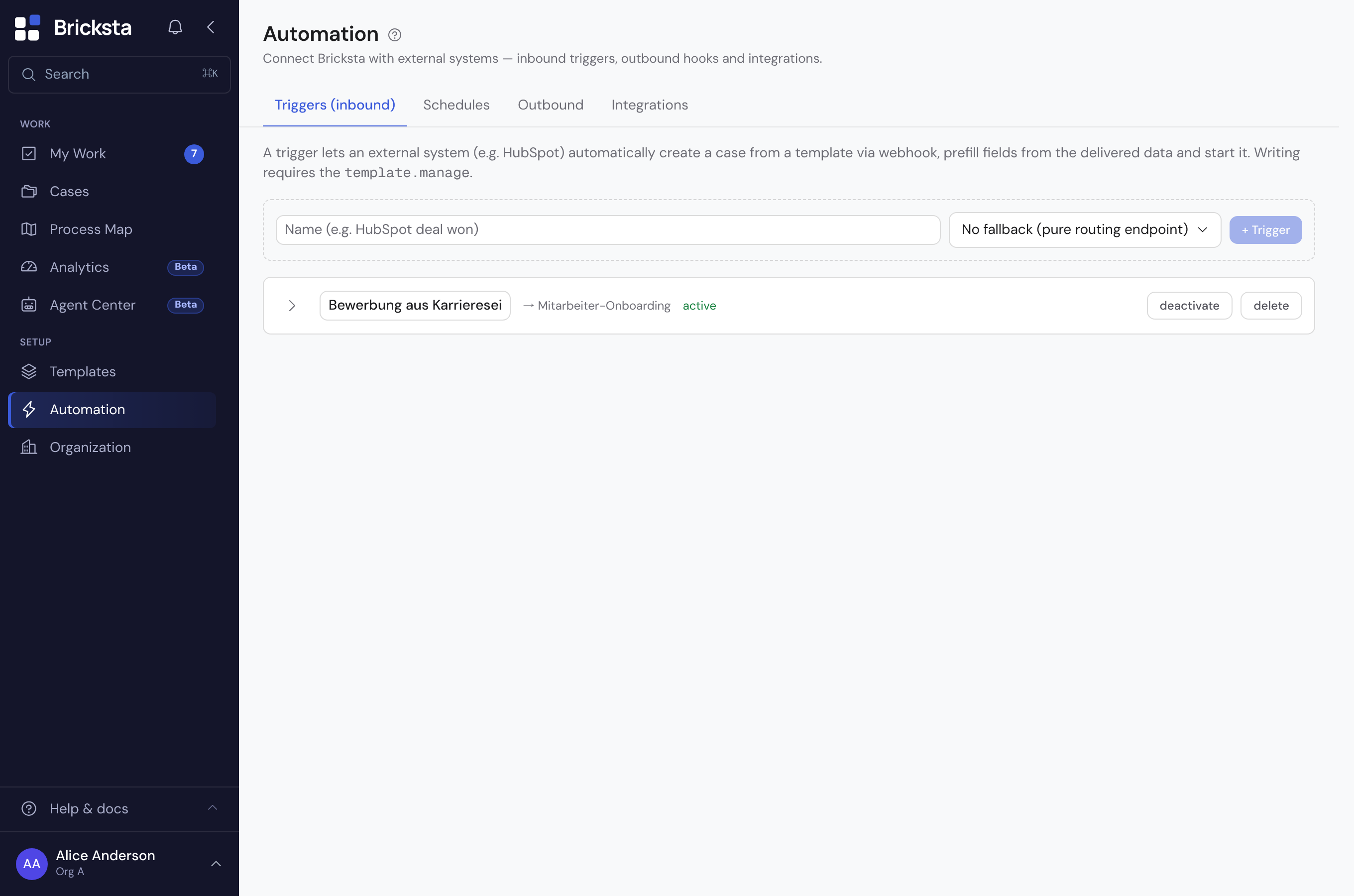
Creating a trigger
- 1Open Triggers (inbound) and create a new one via “+ Trigger”.
- 2Choose the default template (fallback) the case is created from — or leave it empty for a pure routing endpoint.
- 3Connect the external system to the trigger's webhook address.
- 4Map the incoming data fields to the template's fields (field mapping) so the case starts prefilled.
Routing rules
If different inbound events should lead to different templates, you set up routing rules: they pick the matching template based on the incoming data. Without a matching rule, the default template applies. Alternatively the mapping can be AI-assisted based on the content.
Duplicate inbound events and test run
Using an identifier from the data (idempotency), Bricksta makes sure the same event does not accidentally create two cases. With a test run you check a trigger before it goes live: it creates a real case from sample data, so you can see whether the template and field mapping are correct.
Managing triggers requires the template-management right (template.manage).