On this page
What a schedule is
A schedule connects a template to a rhythm: at the set time a new case is created from that template and starts — without anyone opening it by hand. Recurring work is reliably timed and never forgotten.
Creating a schedule
- 1Open Automation → Schedules.
- 2Give the schedule a name and choose the template the case is created from.
- 3Pick the rhythm: daily, weekly or monthly — or “Advanced (cron)” for your own expression.
- 4Set the time and (depending on the rhythm) the weekday or day of month, and choose the time zone.
- 5Save. The schedule shows a preview of the next runs.

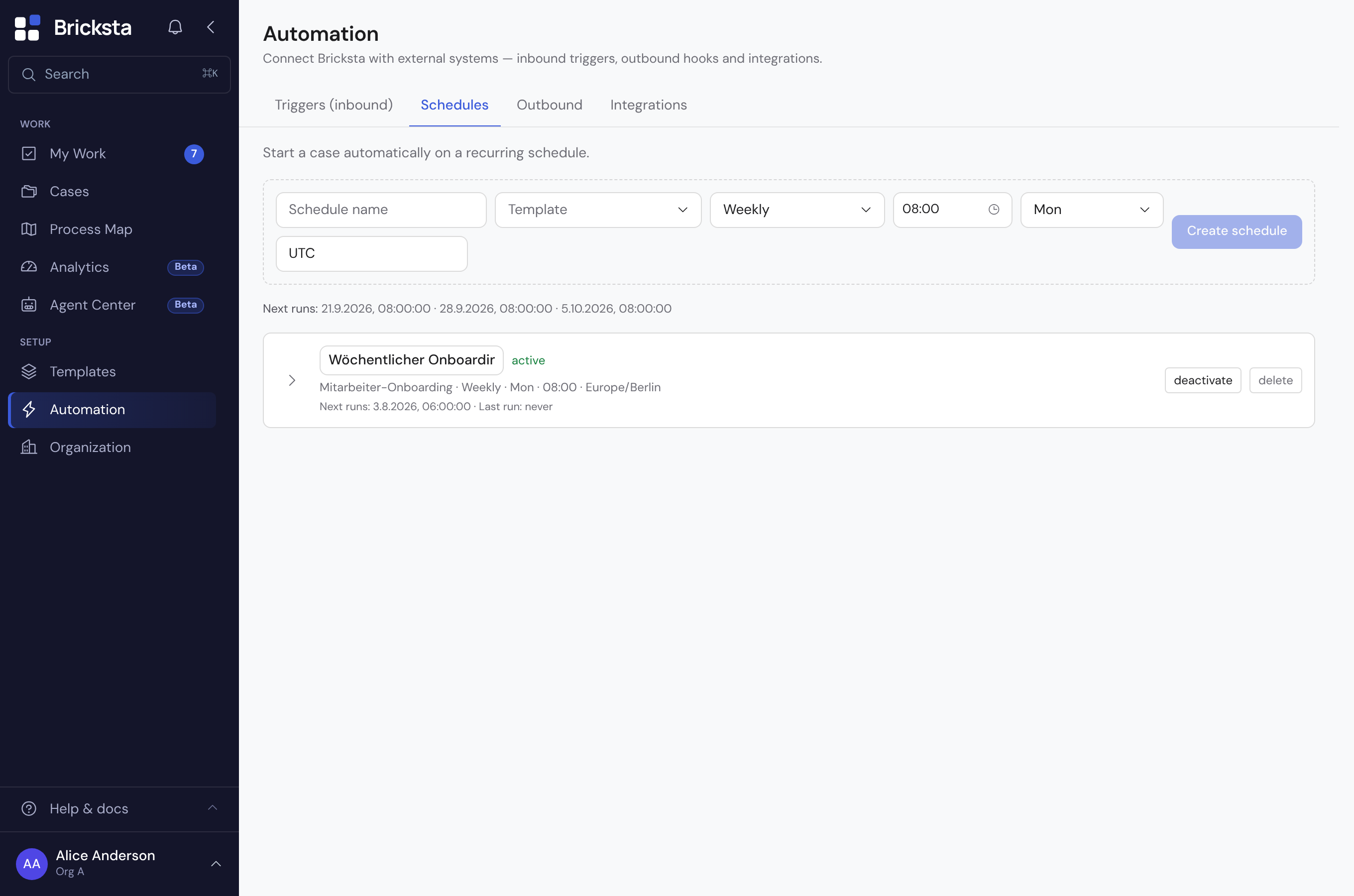
The exact time is computed on the server so it holds regardless of the device. Use the Deactivate button to pause a schedule without deleting it; the run log (expandable via the arrow) shows when a case was last created and whether there were any errors.
Managing schedules requires the template-management right (template.manage). The created cases run on behalf of the member who set up the schedule.